𝗧𝗵𝗲 𝗦𝘁𝗲𝗿𝗶𝗹𝗶𝘇𝗮𝘁𝗶𝗼𝗻 𝗦𝗲𝗰𝗿𝗲𝘁: Why 212°F may kill Bacteria Better Than 400°F (204°C)
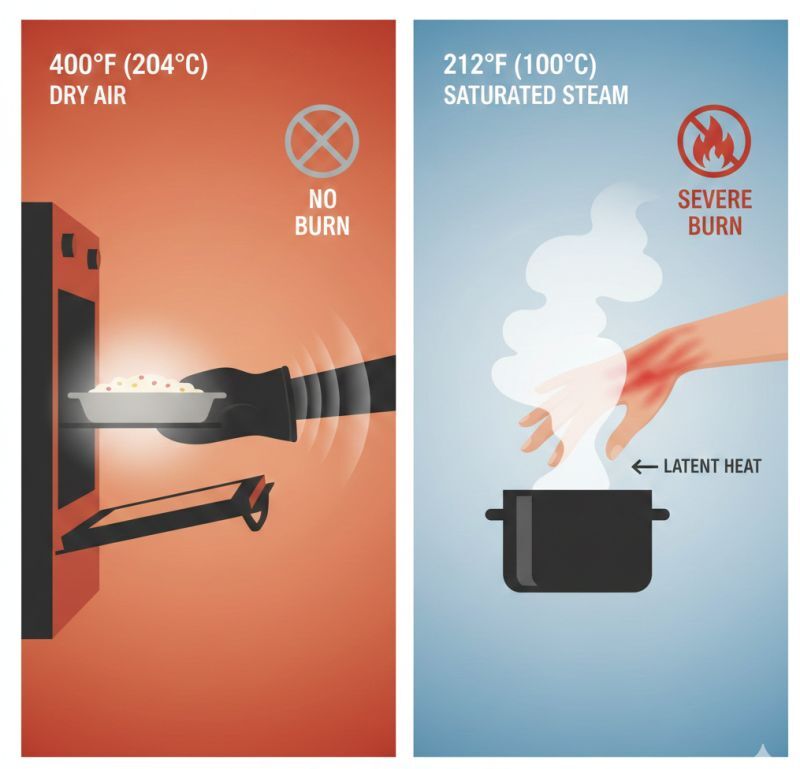
Why does 212°F (100°C) steam burn you worse than 400°F dry oven air? The answer is the secret to successful steam sterilization.
We often focus on the sterilization temperature, but it’s the delivery of heat that does the actual killing.
The massive energy released by the latent heat of saturated steam is key to effectively kill temperature-resistant bacterial spores.
𝗧𝗵𝗲 𝗢𝘃𝗲𝗻 𝘃𝘀. 𝗧𝗵𝗲 𝗕𝘂𝗿𝗻 (Do Not Try This at Home!)
If you cook much, you have probably noticed - you can briefly expose skin to hot, dry oven air with little harm.
But reaching a bare arm over a pot of boiling water with steam can quickly result in a severe burn.
Why? The steam instantly condenses on your skin, dumping an enormous amount of highly concentrated latent heat energy.
This principle is crucial for effective sterilization.
For the heat in steam to effectively kill heat-resistant spore-forming bacteria, it must make direct contact and condense on the surface of the equipment.
This is why air pockets and pooling condensate water are major concerns in steam-sterilized equipment (like Steam-in-Place piping, vessels, and autoclaves). These areas block saturated steam from reaching potential microbial hiding spots.
For effective sterilization: steam penetration (and steam quality) are everything!
I've certainly seen contaminations related to these principles. Have you encountered issues where steam penetration or air removal was the root cause? Share your stories below!